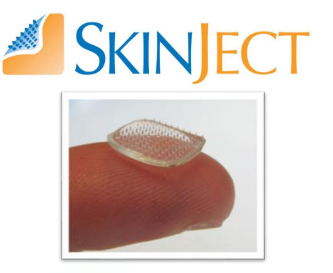
The concept is easy to understand.
Instead of making the blade the first answer for every qualifying lesion, MDCX is evaluating a localized microneedle platform that could potentially offer a less invasive path for certain basal cell carcinoma
patients.
That is why the company’s Phase 2 data matters so much.
The Phase 2 Data That Put MDCX on the Map
Medicus completed a 90 patient randomized, double-blind, three-arm Phase 2 study
evaluating two dose levels of microneedle-mediated delivery compared with a device-only control in patients with nodular basal cell carcinoma.
The topline data showed up to 73% clinical clearance in the highest-dose 200µg cohort.
The company also reported continued biological activity between Day 29
and Day 57, supporting durability of response.
Even more important, the company said the 200µg cohort at Day 57 suggested roughly 3 out of 4 treated patients may avoid immediate surgery.
That is the kind of clinical phrase that cuts through market noise.
Not because it guarantees anything.
It does not.
But because it gives the market something measurable, understandable, and potentially meaningful.
A small company
near $0.30 is not just talking about an early concept. It has Phase 2 data in hand, and the company believes that data supports continued engagement with the FDA around future registrational planning.
That is a very different setup from a purely speculative story.
The Newer Update: Expanded
Analysis Adds More Weight
The May update made the SkinJect story stronger.
Medicus reported results from a pre-specified expanded Phase 2 analysis showing a positive dose-response profile.
The 200µg cohort achieved a 55% complete response at Day 57 and emerged as the lead regimen for future planning.
Safety also matters here. According to the
company’s update, SkinJect showed a favorable tolerability profile, with no treatment-related serious adverse events and no evidence of systemic toxicity reported in the expanded analysis.
That is a critical detail.
A localized platform has to do more than show activity. It has
to show that the delivery profile may be workable for future development.
The expanded analysis gave MDCX another layer to the story. It did not just reinforce the earlier headline data. It helped define the dose direction and gave the company a clearer platform for FDA discussions.
For a name this small, that is exactly
the kind of progress the market can start to re-evaluate.
The Next Step: FDA Pathway Discussions
MDCX expects an End-of-Phase 2 FDA meeting for SkinJect to define the registrational pathway.
The
company has also referenced potential registrational trial design alignment under the 505(b)(2) framework.
That matters because the next big phase of this story is not simply whether SkinJect had encouraging Phase 2 data. It is whether the company can translate that data into a clear late-stage plan.
That is why the next FDA-facing milestones are so important.
The market often re-rates small clinical-stage companies when the story moves from “interesting data” to “defined path.”
MDCX appears to be trying to make that exact transition in 2026.
The Rare Disease Angle: Gorlin Syndrome
SkinJect is not limited to broad basal cell carcinoma market framing.
Medicus is also advancing the SkinJect platform in Gorlin Syndrome, a rare inherited condition also known as nevoid basal cell carcinoma syndrome.
Patients with Gorlin Syndrome can develop numerous basal cell carcinoma lesions over time. For those patients, repeated procedures can become a long-term burden.
That is where a repeatable, localized, non-invasive approach could be especially meaningful if future development supports it.
The company has submitted a rare-disease designation application to the FDA for SkinJect in Gorlin Syndrome patients and has continued collaboration with the Gorlin Syndrome Alliance to support compassionate access and expanded access development initiatives.
This gives SkinJect two layers of potential relevance.
A broad skin cancer lane.
And a rare disease lane where the burden of repeated lesions can be especially severe.
That combination gives MDCX more than one route to create value from the same platform.
The Second Clinical Engine: Teverelix
While SkinJect is the headline, it is not the only MDCX program that deserves attention.
The second major platform is Teverelix, a next-generation GnRH antagonist aimed at advanced prostate cancer patients with cardiovascular risk and
patients with acute urinary retention relapse due to enlarged prostate.
Medicus frames Teverelix as targeting a market of roughly $6 billion across these indications.
In Q1 2026, the FDA provided “study may proceed” clearance for a Phase 2b dose optimization study evaluating
Teverelix in advanced prostate cancer.
Medicus also submitted an optimized Phase 2 protocol to the FDA for prevention of recurrent acute urinary retention in men with benign prostatic hyperplasia.
That gives the company a second clinical lane with meaningful addressable-market framing.
SkinJect is the dermatologic oncology and rare disease platform.
Teverelix is the prostate cancer and urology-focused platform.
Together, Medicus frames SkinJect and Teverelix as representing a combined market framework of roughly $8
billion.
That is the bigger picture.
MDCX is not a one-catalyst microcap story anymore. It has multiple development tracks moving at the same time.
AI-Enabled Clinical Development Adds a Modern Layer
Another underappreciated part of the MDCX story is the company’s continued work around AI-enabled clinical development.
The company has referenced continued progress with its Reliant AI collaboration and broader AI-enabled clinical capabilities.
This does not replace the need for clinical results, FDA alignment, funding, or execution.
But it does add a modern layer to the company’s development strategy.
In a market where speed, trial design, patient selection, data organization, and clinical efficiency matter more than ever, AI-enabled development tools can become a strategic advantage if used
correctly.
For MDCX, the key point is that management is not simply advancing older-style clinical programs in isolation. It is trying to build a broader development platform around clinical assets, regulatory planning, strategic collaborations, and technology-enabled execution.
That is a more sophisticated story than
the current price may suggest.
The Balance Sheet: More Flexibility, Clear Risk
The Q1 numbers also deserve a clear look.
Medicus reported cash and cash equivalents of $6.4 million as of March
31, 2026, compared with $4.0 million as of March 31, 2025.
The company secured approximately $10 million in aggregate gross financing proceeds during the quarter through its ATM facility and SEPA.
Subsequent to quarter end, the company expanded its ATM facility from up to approximately $15.3 million
to up to $50 million.
That gives the company more financing flexibility as it moves through a catalyst-heavy 2026 calendar.
But there is risk here, and it should not be ignored.
Medicus reported Q1 operating
expenses of $8.6 million, research and development expenses of $2.7 million, and a net loss of $9.0 million.
The company also stated it expects to incur operating losses for the foreseeable future and disclosed substantial doubt regarding its ability to continue as a going concern without additional financing.
That is standard small clinical-stage risk, but it is still real.
MDCX will likely need continued access to capital, strategic support, partnerships, or other financing tools as it moves its programs forward.
That is the tradeoff.
The upside case is driven by clinical progress, regulatory execution, platform expansion, and analyst target disconnect.
The risk case is tied to funding needs, dilution, trial execution, regulatory uncertainty, and the normal volatility of tiny clinical-stage names.
Both sides matter.
But the reason MDCX stands out is that the positive side of the ledger has become much more detailed since March.
The 2026 Catalyst Calendar Is the Real Watch Item
The rest of 2026 could be unusually active for MDCX.
The company has highlighted several expected items, including the SkinJect End-of-Phase 2 FDA meeting, potential registrational trial design alignment, advancement of the Gorlin Syndrome FDA pathway, continued evaluation of HelixNano-enabled platform expansion, expansion of Teverelix into women’s health using a genomics-enabled clinical strategy, continued progress with Reliant AI, and ongoing strategic partnering
discussions across both SkinJect and Teverelix.
That is a lot of potential headline flow for a company recently sitting near $0.30.
And in this part of the market, headline flow matters.
Especially when the
setup already has a massive analyst target gap.
Why the Target Gap Matters Right Now
Let’s bring this back to the numbers.
Recent levels have been around $0.30.
The average analyst target is $6.50.
The high target is $9.
That is the kind of disconnect that naturally gets attention.
But a price
target gap by itself is not enough. The better question is whether the company has enough underlying substance to justify a fresh look.
With MDCX, the answer appears to be yes.
The company has reported SkinJect Phase 2 data showing up to 73% clinical clearance in the highest-dose cohort.
The newer expanded analysis showed a positive dose-response profile and identified the 200µg cohort as the lead regimen for future planning.
The company reported no treatment-related serious adverse events and no evidence of systemic toxicity in the expanded SkinJect analysis.
It has FDA clearance to proceed with a Teverelix Phase 2b dose optimization study in advanced prostate cancer.
It has SkinJect and Teverelix market framing of roughly $8 billion combined.
It has multiple expected 2026 milestones.
It has expanded financing flexibility.
And it has analyst targets sitting dramatically above recent levels.
That is why MDCX is not just back on the screen.
It may be one of the more compelling tiny biotech disconnects in the
market right now. 👀
The Bottom Line
MDCX is still a clinical-stage name.
That means risk is part of the equation.
But the
company has moved beyond a thin concept story.
It now has clinical data, expanded analysis, FDA-facing milestones, a second major platform, rare disease expansion potential, AI-enabled development work, and a target gap that is difficult to ignore.
The positive outlook is straightforward:
If SkinJect continues advancing toward a defined registrational pathway, if Teverelix continues progressing through Phase 2 planning, and if the company can support its 2026 roadmap with sufficient capital and strategic execution, the current valuation disconnect could become very difficult for the market to overlook.
Recent levels
around $0.30.
Average target of $6.50.
High target of $9.
Multiple clinical lanes.
Multiple 2026 catalysts.
A platform story that has continued building since March.
MDCX is officially
back on watch.
To your success,
Max Masters
Co-founder, Market Tips Newsletter