Going Global (Without Blowing the Budget) (1)(2)(3)(8)
Here's where it gets interesting. Instead of building facilities everywhere themselves, XCF Global (Nasdaq:SAFX) launched a capital-light licensing strategy designed to accelerate SAF adoption worldwide.
In October
2025, they signed a binding term sheet with New Rise Australia for an exclusive 15-year license.
The deal: XCF's facility design, configuration, and layout deployed across at least three renewable fuel production facilities in Australia. XCF retains IP ownership and gets a 12.5% equity stake, plus licensing fees and a board seat.
That's the blueprint for scaling globally without bearing all the capital burden and Australia is an obvious first
market given its energy priorities and liquid fuel import dependence.
The Distribution Game-Changer (1)(2)(3)(8)
Then there's the logistics piece, which frankly might be the most underrated part of the story.
XCF Global (Nasdaq:SAFX) just entered into an MOU with BGN—a global renewable fuels trading, marketing,
and distribution company which serves customers in over 120 countries.
BGN moves ~50 million tons of fuel and commodities through global energy value chains each year.
The partnership aims to expand XCF's reach into Europe and the Middle East through production offtake and co-branded distribution.
Translation: SAF produced by XCF facilities can actually reach the customers who need it. That solves one of the industry's biggest
bottlenecks.
You can produce clean fuel, but if you can't distribute it efficiently to the airlines who need it, the game doesn't work.
The People Behind the Plan (1)(4)
Chris Cooper just joined as CEO with over 25+ years in renewable fuel, aviation, and downstream energy.
He's held senior roles at Neste
(basically the global SAF leader), BGN, Phillips 66, and Chevron.
This isn't a startup founder trying to figure it out.
This is an industry operator who knows exactly how to scale production and partnerships at this level.
Why This Matters Right Now (1)(2)(3)(4)(8)
The aviation energy transition isn't
theoretical anymore.
It's operational. Airlines are actively seeking sustainable fuel.
Governments representing billions of travelers are writing policies and incentives around low-carbon aviation.
The infrastructure is building. The demand signal is real. The policy tailwind is blowing.
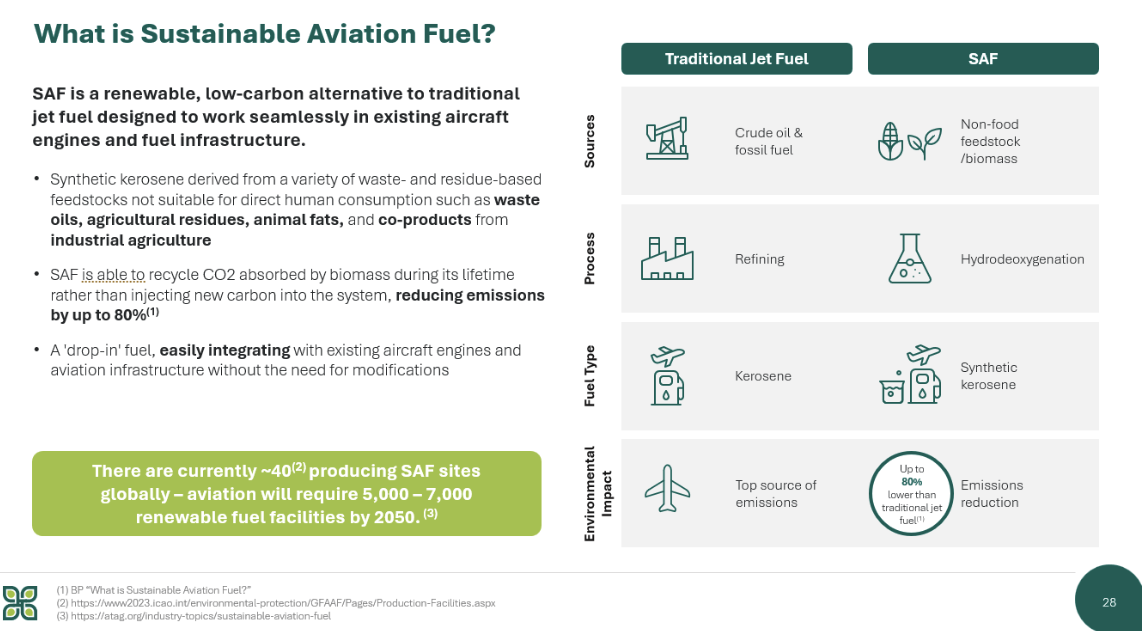
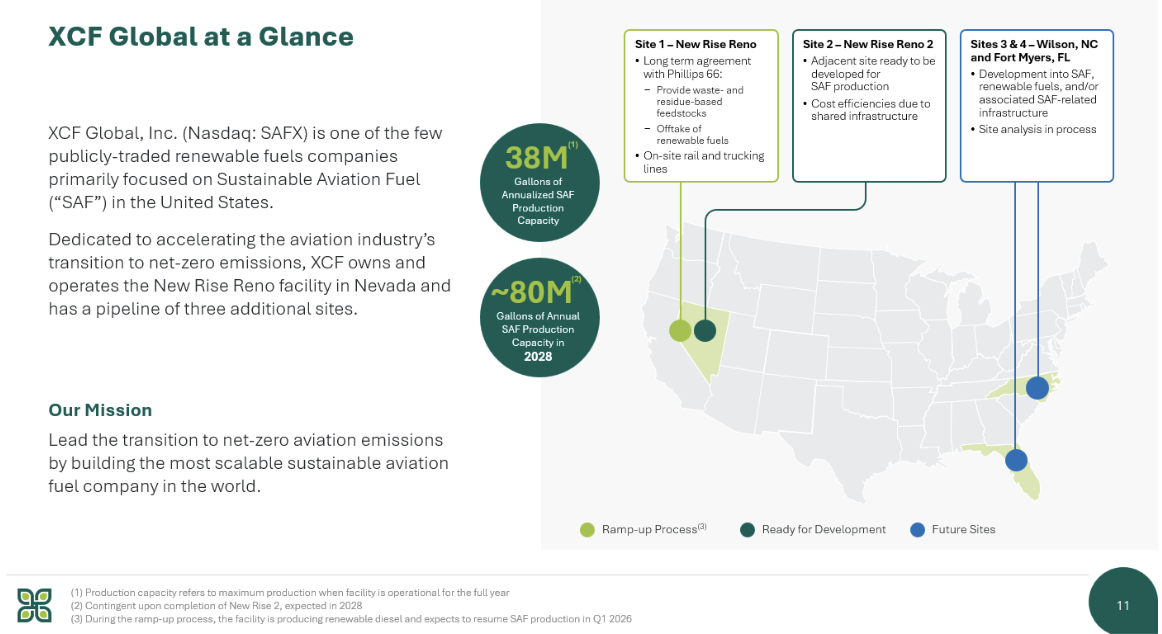
XCF Global (Nasdaq:SAFX) is positioning itself to capture this moment through: domestic production
capacity, a capital-light international model that can replicate quickly, and an emerging global distribution and logistics partnership strategy that actually connects supply to demand. (6)
The combination creates a commercial path that aligns with a future where cleaner flight becomes a global expectation rather than an aspiration.
The next chapter begins now.